


Spinal Decompression Therapy in Orillia
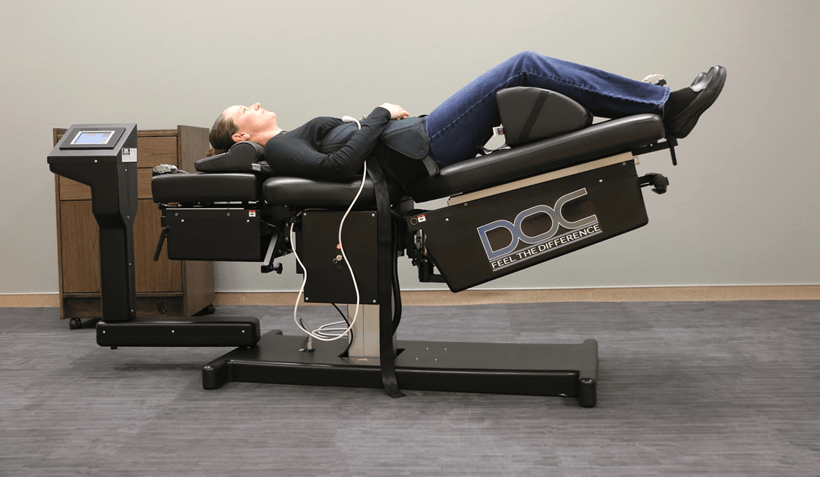 Living with ongoing lower back pain, neck pain, sciatica, or a bulging or herniated disc can affect more than just how you move. It can make sitting at work uncomfortable, interrupt your sleep, and make everyday activities feel harder than they should.
For many people, non-surgical spinal decompression is an effective treatment option worth considering. At Grace Family Chiropractic, we use this form of care for for people with disc-related conditions including degenerative disc disease, disc bulges and disc herniations. Decompression has helped many patients find relief and avoid medications, injections and surgery.
How Spinal Decompression Works
Spinal decompression uses a specialized, computer-controlled table to gently stretch and relax the spine. The table applies carefully controlled traction, which may help reduce mechanical pressure on irritated areas while also stretching the muscles, joints and tissues around the spine.
The process is non-invasive, with no incisions or surgical recovery time. Because back pain can have many different causes, we first assess your health history, spinal movement and function before deciding whether decompression may be appropriate for you. The assessment may also include orthopaedic or neurological testing and a review of any existing imaging or medical reports.
When Disc and Nerve-Related Pain Calls for a Different Approach
Disc changes often irritate nearby structures and can be associated with back pain, neck pain, leg pain, arm pain as well as numbness and tingling. Depending on your diagnosis and examination findings, spinal decompression may be considered as part of a treatment plan for conditions such as:
- Lower back pain
- Neck pain
- Sciatica
- Bulging or herniated discs
- Degenerative disc disease
- Certain pinched or irritated nerves
- Leg pain associated with lumbar spine problems
- Pain travelling into the arms or hands
- Chronic mechanical lower back pain
- Spinal stenosis
Gentle, Fully Clothed and Closely Monitored
You remain fully clothed and lie comfortably on the decompression table, where a harness or positioning system applies controlled traction to the treatment area. The amount and pattern of traction are set according to your individual plan and adjusted for your comfort throughout the session. Many patients find the treatment relaxing rather than uncomfortable.
How many visits you need, and how long each session takes, depends on your condition, how long you have had it, and how you respond to care. Spinal decompression does not need to stand alone. Depending on your needs, it may be combined with chiropractic care, physiotherapy, therapeutic exercise or mobility work at the practice.
A Conservative, Non-Surgical Treatment Option
For many patients, spinal decompression may be considered as part of a conservative treatment plan. The gentle traction is designed to temporarily reduce mechanical loading on the spine. Depending on the condition and individual response, many patients may experience changes in pain and function with traction-based care.
Treatment is computer controlled and can be adjusted throughout based on your comfort and response. While many patients will benefit from spinal decompression, results vary from person to person and are not guaranteed.
Spinal decompression is not suitable for everyone. Certain medical conditions, previous spinal surgeries, fractures and severe osteoporosis may rule it out, which is why a review of your health history and an examination always come first at Grace Family Chiropractic.
Frequently Asked Questions
Is spinal decompression painful?
How many treatments will I need?
Can spinal decompression help sciatica?
Do I need an X-ray or other imaging before I start?
Is spinal decompression the same as chiropractic care?
Is Spinal Decompression Right for You?
If chronic back pain, neck pain, sciatica or disc degeneration is interfering with your work, sleep or everyday activities, our team can help you understand whether non-surgical spinal decompression may be suitable for your condition.
We welcome patients from Orillia and surrounding communities. Contact Grace Family Chiropractic to book an assessment or request an appointment online.
